
多学科 · 跨平台 · 实验性合作
清华大学社会网络研究中心成立于2013年1月3日,是一个多学科、跨平台的实验性合作研究中心。研究中心成立以来,在计算机系和社会学系的紧密合作下,在罗家德老师、唐杰老师和傅晓明老师以及郑路老师的指导和带领之下,成果颇丰。
参与了多项研究合作项目,举办2013年社会网络分析国际研讨会(INSNA会议)以及主办了2017 Sunbelt会议,另从2015年起每年举办关系研究国际研讨会。
Jar-Der Luo, Tsinghua University
James Evans, University of Chicago, USA
The Center for Social Network Research, Tsinghua University
Follow our WeChat
public account
Journal of Social Computing (JSC) is an open access, peer-reviewed scholarly journal which aims to publish high-quality, original research that pushes the boundaries of thinking, findings, and designs at the dynamic interface of social interaction and computation.
This will include research in:
The editorial board welcomes research from fields ranging across the social sciences, computer and information sciences, physics and ecology, communications and linguistics, and, indeed, any field or approach that can challenge and advance our understanding of the interface and integration of computation and social life.
We seek to take risks, avoid boredom and court failure on the path to transformative new paradigms, insights, and possibilities.
The journal is open to a diversity of theoretic paradigms, methodologies and applications.
The journal will be completely Open Access with no submission/publication fees for authors.
Daniel ACUNA, Syracuse Universiry, USA
Adam JATOWT, Kvoto Universiry, Japan
Lav R. VARSHNEY, Universiry of lllinois Urbana-Champaign, USA
Anjali ADUKIA, University of Chicago, USA
Peaks M. KRAFFT, University of Arts London, UK
Nikita BASOV, Si Petersbure State Universit, Russia
Jennifer LEE, Columbia Universit, USA
Brooke Foucault WELLES, Universirs of Michigan, USA
Joshua Aaron BECKER, Northwestern University, USA
Jianxin LI, Beihang University, China
Aylin CALISKAN, Universiry of Washington, USA
Wenzhong LI, Nanjing University, China
Jevin WEST, University of Washington, USA
Ishanu CHATTOPADHYAY, Universiry of Chicago, USA
Zhiyuan LIU, Tsinghua University, China
David WOLPERT, Santa Fe Institute, USA
Ling CHEN, University of Technology Sydney, Australia
Alexander MEHLER, University of Frankfurt, Germany
Chao WU, Zhejiang University, China
Yunsong CHEN, Nanjing University, China
Xiaofeng MENG, Renmin University of China, China
Felix WU, University of California, Davis, USA
Rumman CHOWDHURY, Twitter, USA
Sophie MÜTZEL, University of Lucerne, Switzerland
Hu YANG, Central University of Finance and Economics, China
Noel CRESPI, Telecom SudParis, France
Laura K. NELSON, Northeastern Universiry, USA
Sholei CROOM, MIT, USA
Sastry NISHANTH, King's College London, UK
Katherine YE, Carnegie Mellon University, USA
Sherry EMERY, University of Chicago, USA
Paolo PARIGI, Stanfond Universiry and Airbnb, USA
Xinyue YE, Texas A&M University, USA
Ying FAN, Beijing Normal University, China
Oliver POSEGGA, University of Bamberg, Germany
Hongzhi YIN, University of Queensland, Australia
Mirta GALESIC, Santa Fe Institute, USA
Ángel Cuevas RUMiN, Universidad Carlos III de Madrid, Spain
Meg YOUNG, University of Washington, USA
David GARCIA, TU Graz, Austria
Hui ZHANG, Tsinghua University, China
Tyson GARETH, Queen Mary University of London, UK
Oshani SENEVIRATNE, Rensselaer Polytechnic Institute, USA
Jiang ZHANG, Beijing Normal University, China
Peter GLOOR, MIT, USA
Lun ZHANG, Communication University of China, China
Weiwei GU, Beijing University of Chemistry Technology, China
Nandana SENGUPTA, IIT Delhi, India
Lynette SHAW, University of Michigan, USA
Yong ZHANG, Tsinghua University, China
Xiaobin HE, Tsinghua University, China
Roberta SINATRA, IT University of Copenhagen, Denmark
Hong ZHAO, Tsinghua University, China
Haliang HUANG, Shanghai University of Finance and Economics, China
Janine SLAKER, University of Washington, USA
Lu ZHENG, Tsinghua University, China
Steffen STAAB, University of Stuttgart, Germany
Tao ZHOU, UESTC, China
Hong HUANG, HUST, China
Christian STEGBAUER, University of Frankfurt, Germany
Jianhua ZHU, City University of Hong Kong, China
Karen HUANG, Georgetown University, USA
Yu-Sung SU, Tsinghua University, China
Pan HUI, University of Helsinki & HKUST
Zhi-Xuan TANG, MIT, USA
Misha TEPLITSKIY, University of Michigan, USA

James Evans is Professor of Sociology, Faculty Director of Computational Social Science and Director of Knowledge Lab at the University of Chicago and the Santa Fe Institute. His research uses large-scale data, machine learning and generative models to understand how collectives think and what they know, with a special focus on innovation in science, technology, ideology, and culture.
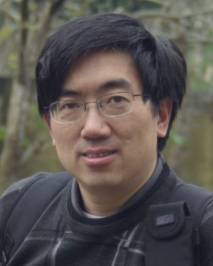
Jar-Der Luo is a professor at Department of Sociology, Tsinghua University, president of Chinese Network for Social Network Studies, and chairman of Tsinghua Social Network Research Center. He received the PhD degree from State University of New York at Stony Brook in 1993. He researches numerous topics in social network studies including social capital, trust, social network analysis in big data, self-organization process, and Chinese indigenous management researches, such as guanxi and guanxi circle.

Xiaoming Fu received the PhD degree in computer science from Tsinghua University, Beijing, China in 2000. He was then a research staff at Technical University of Berlin until joining the University of Gottingen, Germany in 2002, where he has been a professor in computer science and heading the computer networks group since 2007. He has spent research visits at Cambridge, Columbia, UCLA, Tsinghua University, Uppsala, and UPMC, and is an IEEE senior member and distinguished lecturer. His research interests include Internet-based systems, applications, and social networks.